
Does Milk-Based Skincare Work? The Science Behind This Growing Skincare Trend
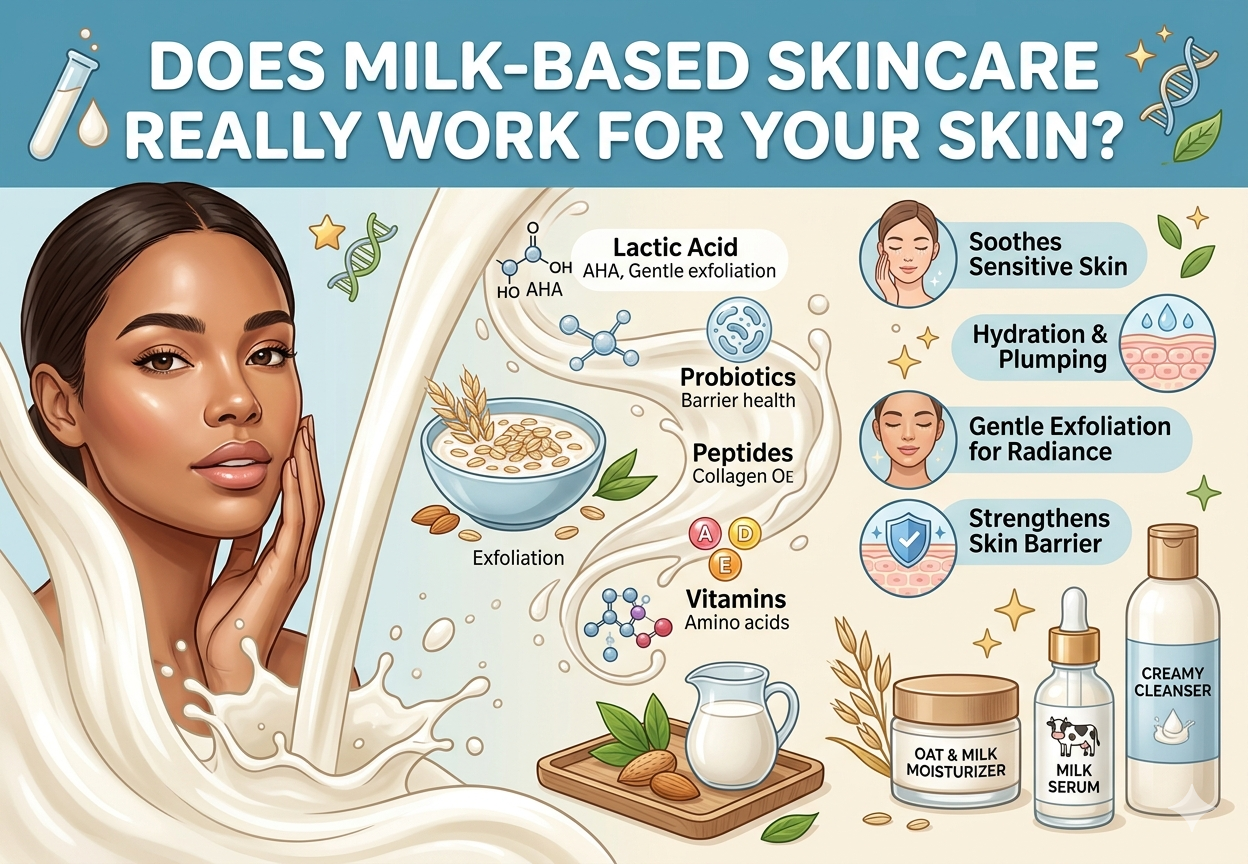
The connection between milk and beauty care stretches back several centuries in time. There have been instances of mentions of milk baths, milk masks, and other milk-based remedies for keeping the skin smooth and radiant. However, although all of these methods might seem old-fashioned, the beauty industry has managed to find new uses for milk in cosmetics and skincare products.
Currently, there are a number of different milky products in the market: cleansers, toners, and moisturizers among others, which can be found in skincare formulas with rice milk, goat milk, oat milk, and milk proteins among others. However, the big question remains: Is milky skincare effective?
Let’s explore what milk-based skincare is, how it works, and whether it deserves a place in your skincare routine.
What Is Milk-Based Skincare?
Milk-based skincare products are those which are made using active ingredients that have been inspired or taken from milk itself.
Some examples include:
- Rice milk
- Goat milk
- Oat milk
- Milk protein
- Milk peptides
- Fermented milk extract
Contemporary milk-based skincare has little resemblance with what is obtained from direct application of raw milk to skin. It involves a scientific approach which takes care of both efficacy and stability of the formulation.
Why Milk Has Been Used in Beauty for Generations
Milk, which has long been used in beauty routines, predates the age of lab-tested products with carefully selected ingredients.
It was thought to be able to:
- Moisturize the skin
- Smooth its texture
- Radiant complexion
- Decrease dryness
And there was some scientific truth to that.
Since milk contains:
- Amino acids
- Proteins
- Vitamins
- Fats
- Minerals
Those nutrients aid in hydration and provide a smoother skin surface. Skincare products have incorporated those ideas into modern formulas.
How Milk-Based Skincare Benefits the Skin
The efficiency of milk skincare products mainly depends on the kind of milk component included in their composition.
However, despite the differences in the kinds of milk components, there are certain general benefits attributed to milk skincare products that may be worth considering.
Hydration Support
Perhaps, the most important benefit of milk skincare products is hydration. Water and lipids in appropriate proportions are essential for healthy-looking and comfortable skin. Milk usually contains various proteins and other substances that moisturize the skin.
A properly hydrated skin tends to appear:
- Smooth
- Plump
- Radiant
- Healthy-looking
For this reason, milk-based cleansers and serums became increasingly popular among people with dry or dehydrated skin.
Improved Skin Barrier Function
The skin barrier is the body’s natural defense against any kind of external aggressors.
If there is a disruption in the skin barrier, it could lead to:
- Dry skin
- Irritation
- Sensitivity
- Redness
Some components from milk provide proteins and nutrients that help strengthen the skin barrier. An intact skin barrier helps improve the condition of the skin and its ability to protect itself.
Brighter-Looking Skin
Many milk-containing skin care products are used to create a skin brightening effect. Although they cannot significantly change the color of the skin, they help make the skin clearer. The skin will naturally be able to reflect light better when it is well-nourished.
Rice milk is one of the ingredients that are commonly found in products that claim to make your skin brighter.
Why Rice Milk Is Becoming Popular in Skincare
Amidst all other dairy-based ingredients, rice milk has become one of the most desirable choices in skin care. The use of rice in skin care treatments dates back many years in Asian culture. Rice milk is a product that contains elements that make your skin look good without being too harsh on it.
Rice milk is known for its ability to:
- Soften the skin
- Brighten
- Moisturize
- Change skin texture
Unlike other aggressive brightening agents, rice milk acts gently on the skin and allows it to flourish. It can be used by different skin types.
Milk-Based Skincare and Sensitive Skin
One of the reasons why milk-inspired formulas remain popular is because of their reputation for being mild.
Most skincare products that have been created recently contain powerful ingredients. Although these powerful ingredients work effectively, they are not necessarily suitable for everyone.
Milk-based products may appeal to those who want:
- Mild formulations
- Hydration daily
- Barrier protection
- Gentle brightening
If the right formulation process is followed, milk-based products can offer a number of benefits without causing skin irritation.
It should be mentioned that the response of each person to these products may differ.
Does Milk-Based Skincare Help With Pigmentation?
It is one of the most frequently asked questions when it comes to milk-based products. It depends on what your expectations are.
Milk-based ingredients are not usually considered a strong option for improving pigmentation issues when compared to active ingredients such as Alpha Arbutin, Tranexamic Acid, and Niacinamide.
But milk-based ingredients can help in making your skin appear healthier because of:
- Higher levels of hydration
- Less dull skin appearance
- Healthier skin barrier
- Clearer skin in general
Milk-based products can be very effective if combined with targeted active ingredients. For instance, rice milk and Alpha Arbutin are often used together.
The Difference Between Milk-Based Skincare and Raw Milk
One common misconception is that milk-based skincare products are simply bottled versions of raw milk. This is not the case. Raw milk contains components that may not be suitable for direct skincare use, including bacteria and unstable compounds.
Professional skincare formulations isolate and refine specific beneficial ingredients while ensuring:
- Safety
- Stability
- Consistency
- Better absorption
This is why modern milk-inspired skincare products generally perform better than DIY milk treatments.
Is Milk-Based Skincare Suitable for Oily Skin?
However, it is commonly perceived that dairy-based skincare items are meant for dry skin only. However, whether they are good for your skin type or not, will depend on their formulation. Since such creams do not necessarily add oil, but mostly moisturize the skin, they can prove beneficial even to those individuals having oily skin.
In fact, the best thing about well-hydrated skin is that it functions much better than skin that is constantly devoid of water content.
Sometimes, dehydrated oily skin starts producing oil as compensation for lost moisture content.
Why Milk-Based Skincare Is Growing in Popularity
There have been trends in the skincare industry towards products that promote the health of the skin barrier. It has been understood that to have healthy skin, one does not always need the harsh methods for achieving that goal.
Rather, to get healthy skin, it requires the following elements:
- Water content
- Skin barrier protection
- Consistency
- Soft treatment
Skin care products based on milk meet these requirements completely.
Instead of seeking dramatic changes overnight, such products seek to improve skin in a subtle manner.
Who Should Consider Milk-Based Skincare?
Milk-based skin care products can certainly be considered if you are someone who seeks:
- Mild moisturization
- Daily feeding
- Barrier protection
- Mild lightening effects
- Softening of skin
This option can be especially attractive for those with:
- Dry skin
- Dehydrated skin
- Sensitive skin
- Dull skin
- Weak skin barriers
Due to differences in formulations, it is always important to select products that suit your individual needs.
Final Thoughts
Well, does it do its magic?
Absolutely, and provided proper formulation, milk skincare is able to deliver some significant benefits for skin health. Though it might not replace the effectiveness of some specialized active ingredients for the treatment of such issues as hyperpigmentation and acne, there is no doubt it can serve as an excellent complementary agent for hydration and protection.
Substances such as rice milk have been very useful in transforming the milk skincare concept into a more modern one, incorporating traditional skincare knowledge with current scientific developments in product formulations.
There is no denying that the surge in demand for milk cleansing agents, milk serums, and moisturizing creams proves a greater tendency towards gentler, nourishing, and healthy skincare practices.
In the end, it all boils down to proper formulation and selecting products that suit one’s personal skin requirements. As for those who can vouch for the benefits of milk-based skincare treatments, they will tell you that some beauty practices simply never get old.